Sports injury
Athlete and sports injury care
Individualised plans for a body under training load, built with the Gonstead Technique, from a doctor who has played and coached at the level he now treats.
Chapter 01
What a training body is telling you
Pain during or after training is the obvious sign, but it is rarely the first one. Limited joint mobility, injuries that keep coming back or take longer than they should to heal, and form that quietly breaks down under fatigue all show up earlier.
Uneven muscle strength from one side to the other, and headaches or neck pain that turn up on a regular schedule rather than after a single bad session, both point the same direction: something in the chain is compensating for something else. None of that resolves by training around it.
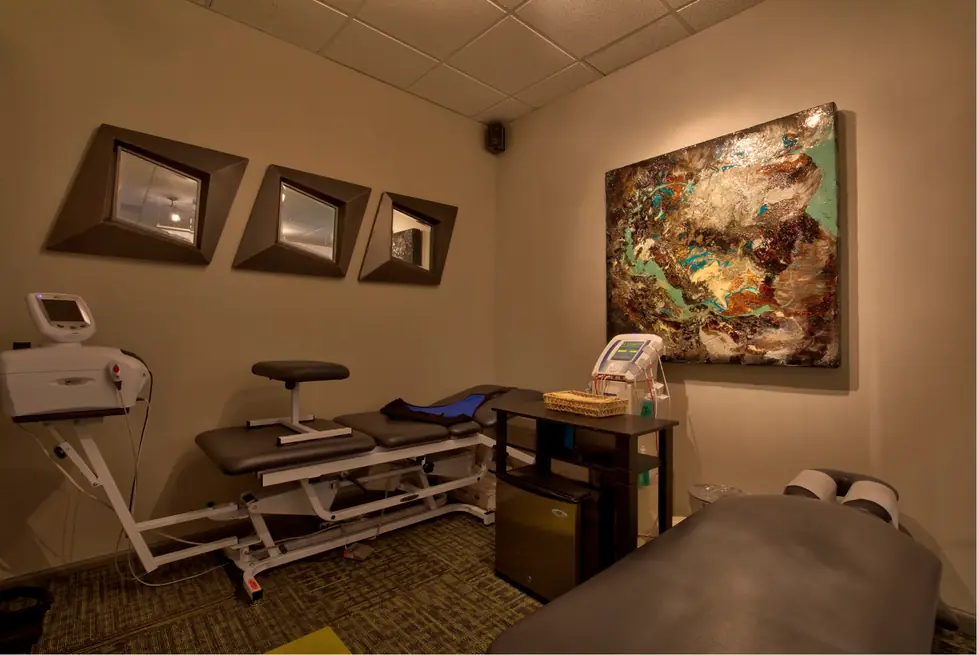
A treatment room at the Germantown office, with a traction table and laser therapy unit
An individualised plan, built on the Gonstead Technique
Every plan here is built for the athlete in front of us, not pulled off a shelf. That starts with a proper analysis of the spine using the Gonstead Technique before any adjustment is made, so the work addresses what is actually misaligned rather than what is assumed to be.
A body that trains hard puts repeated load through the same joints and the same patterns week after week. A plan that only reacts to whichever pain is loudest this week will always be a step behind that load.
Chapter 03
Care that runs the whole season, not just the injury
The goal is long-term wellness guidance, not a single fix and a discharge. An athlete's needs change between preseason conditioning, competition and recovery, and the plan is built to track that rather than stop the moment the acute pain settles.
That is also why the signs above matter even when nothing has forced a stop yet. Staying available through a season means catching the small compensations before they turn into the kind of injury that does force one.
A doctor who has played and coached, not just studied
Dr. Philip Berardi played baseball and basketball through high school, college and post-graduate study, and later worked with University of Missouri athletic teams and several youth hockey and track teams, alongside a senior internship at several local clinics.
He practises at the Memphis office on Summer Avenue. That background is not a credential on a wall. It is the reason the questions asked about training load, form and recovery come from someone who has actually stood on the field asking them.
Chiropractic Memphis — Most major insurance plans accepted. Call (901) 861-1212.