What Happens on Your First Visit
From the front desk to the X-ray room to the table where your plan gets explained, here is what an actual first visit looks like.
September 15, 2026 · 3 min read
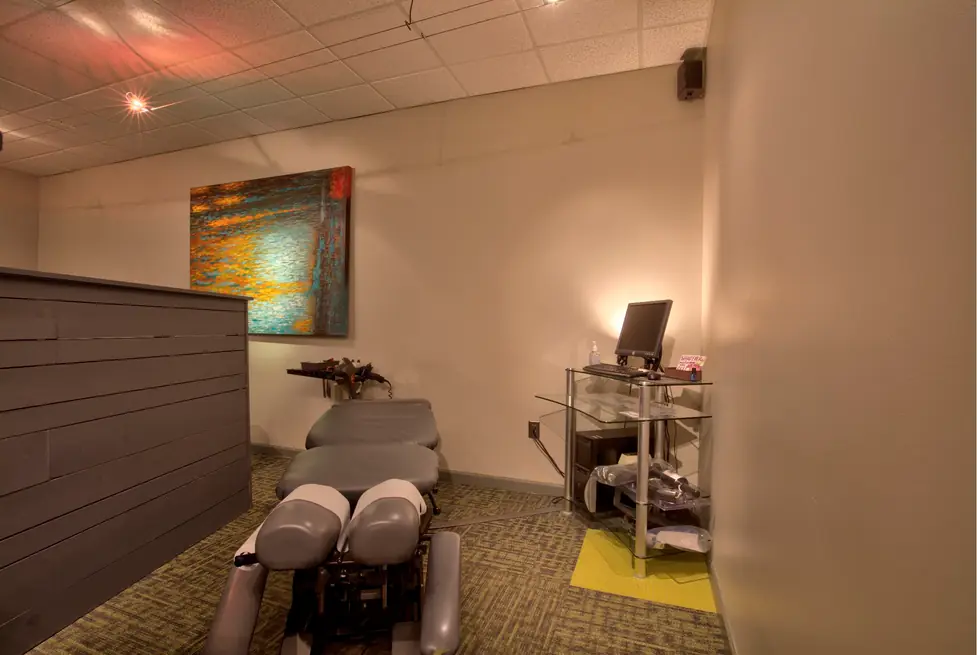
Most people who call us have never been adjusted before, and the parts of a first visit that nobody explains ahead of time are usually the parts people worry about most. Here is what actually happens, in order, at any of our three offices.
The front desk handles the insurance question first
Before you see a chiropractor, the front desk works out what your insurance plan covers. We accept most major plans, and because benefits vary by policy, our staff checks coverage rather than making you guess on the spot. Same-day appointments are often available at all three offices, so the paperwork usually gets sorted the same day you walk in, not the week before.
The first visit is an exam, not an adjustment
A first visit is built around finding out what is actually going on, not around getting you onto a table as fast as possible. You will talk through what brought you in, how long it has been going on, and what makes it better or worse. That conversation shapes everything that happens next, including whether imaging is needed before any hands-on treatment starts.
The X-ray room
At the Germantown office, that next step is often a walk into the X-ray room, which has its own imaging equipment and wall charts on the lower back and the nervous system. The point of imaging is simple: a chiropractor should be able to see the spine before deciding how to treat it, rather than guess from the outside. That same principle sits behind Dr. Reed Johnson's Gonstead-based approach, which we cover in more detail in a separate article on this site.
The teaching corner
Once there is a picture of what is going on, you sit down, not stand in a doorway, at a high-top table across from a spine model and a screen in what our team calls the teaching corner. This is where a doctor walks through what the X-ray showed and what the plan looks like from here. Nobody should leave a first visit unclear on what was found or why a particular treatment was recommended.
What to bring on your first visit
- Your insurance card, so the front desk can check what is covered before you are seen.
- A photo ID.
- Any recent X-rays, MRI results, or notes from another doctor, if you have them.
- A list of current medications.
- Comfortable clothing you can move in for the exam.
Any of our three offices works the same way
The same first-visit structure holds at all three offices, though each has its own hours and its own doctor. The Collierville/Germantown office at 3169 Professional Plaza Drive is staffed by Dr. Dave Kellenberger and Dr. Reed Johnson and is where the X-ray room and teaching corner described above are. The Germantown/Southwind office on Winchester Road is Dr. Alan Arstikaitis's office, and the Memphis office on Summer Avenue, with Dr. Philip Berardi, is the only one of the three open on the second Saturday of each month. All three take same-day appointments when they are available, so it is worth calling whichever office is closest rather than assuming you need to wait.
What changes on your second visit
Once the exam and imaging are done, later visits move faster because the assessment is already on file. A second visit is usually the first actual treatment session, built around the plan from your first appointment, whether that is an adjustment, decompression, or another service. You will not repeat the full history and X-ray process at every visit, just when something changes enough to call for a fresh look. Most patients notice the appointment itself is shorter than the first one, since the doctor is following a plan rather than building one from scratch.
What you leave with
You leave with a treatment plan built around what was actually found, not a generic printout handed to every patient. For some people that means spinal adjustments. For others it means decompression therapy, or a referral toward one of the other services offered across our three Memphis-area offices. Whatever the plan, it is built for your spine specifically, at whichever office is closest to you, with staff who already sorted out the insurance question before you sat down.
Chiropractic Memphis Health & Wellness, (901) 861-1212
Call (901) 861-1212More articles
What the Gonstead Technique Is, and Why We Analyze Before We Adjust
The Gonstead Technique is built on one idea: find the exact problem before you touch the spine.
Sciatica or Just a Sore Back? How to Tell the Difference
Not every ache in your lower back is sciatica, and the difference changes what actually helps.